EUACCIssue #20 · 14-21 Sep 2026
The EU's hardware sovereignty bet arrived as capital this week - EIB's first direct ETCI co-investment, a Samsung-backed Dutch AI chip unicorn, and Europe's most valuable cybersecurity company, all in 24 hours.
🧠The Big Picture
The EU's Hardware Sovereignty Bet Arrived as Capital, Not Policy
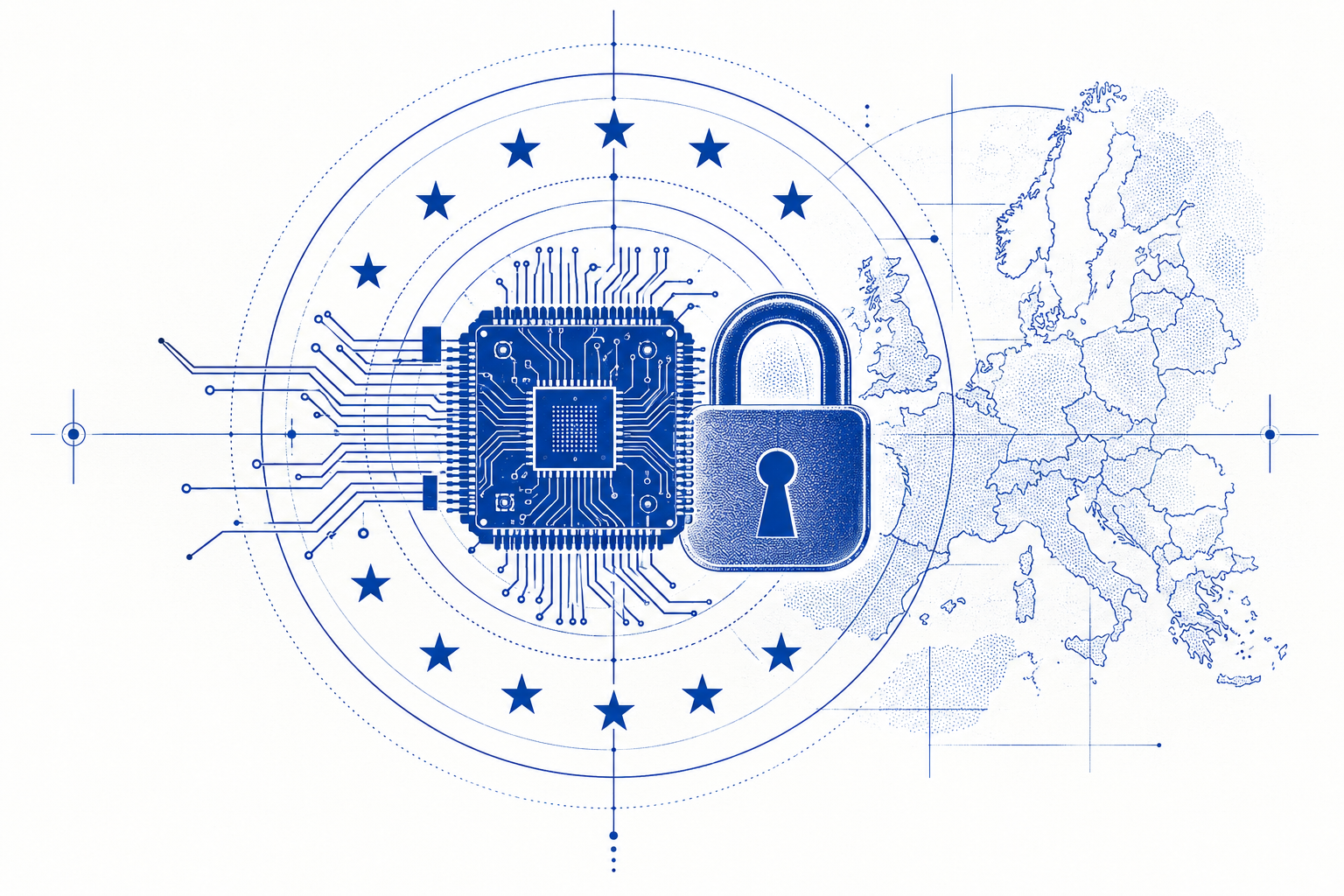
For three years, European hardware sovereignty was a document — the Chips Act, the AI Continent Agenda, the Strategic Roadmap. This week it became capital. On 15 September, the European Investment Bank Group made its first-ever direct co-investment through the European Tech Champions Initiative (ETCI) — not into a fund, but directly alongside private investors into a company: Exein, Rome's physical AI security company, now Europe's most valuable cybersecurity scaleup at $1.7 billion. It is a structurally important move: ETCI was designed as a fund-of-funds, and this transaction marks the opening of its direct investment toolkit.
On the same day, EUCLYD — an Eindhoven startup building chip systems to reduce the energy cost of running foundation AI models — closed a €200M+ Series A with Samsung, the Scaleup Europe Fund (managed by EQT), and Innovation Industries. The company's new chairman is Peter Wennink, former chief executive of ASML. The signal is not subtle: the former head of Europe's most important semiconductor equipment company is now anchoring the continent's most ambitious bet on efficient AI silicon.
The thesis that binds both deals: the EU is no longer buying AI from American hyperscalers and calling it sovereignty. It is funding the chips that run AI models (EUCLYD), securing the machines those chips power (Exein), and directing sovereign capital — ETCI, the Scaleup Europe Fund, KfW Capital, T.Capital (Deutsche Telekom's strategic arm) — at both. The Cloud and AI Development Act, tabled in June alongside Chips Act 2.0, is the legislative frame. The deals completed this week are the first infrastructure to fill it.
📋Grant World
Two Days to the Ocean Mission — and Six Weeks to the EIC Accelerator November Cut-off
Two deadlines land this week; one more clusters in early November.
⚠️ Horizon Europe Mission: Restore Our Ocean and Waters · 23 September 2026 · €115M total across five topics · Covers marine habitat mapping (OCEAN-01), aquatic pollution and biodiversity solutions (OCEAN-02), fisheries co-management (OCEAN-03), European ocean technology testing sites (OCEAN-04), and regional components of the EU Digital Twin Ocean (OCEAN-05). Consortium required; at minimum three independent entities from different EU member states. This call opened in February and submissions close Wednesday at 17:00 CEST — if your consortium is not portal-ready today, this window has closed.
EIC Accelerator Short Proposals · Rolling, collected first Tuesday of each month · No fixed deadline. The entry point for first-time applicants: a 12-page summary, 10-slide deck, and 3-minute video. Submitting in early October locks in review time ahead of the November cut-off.
EIC Accelerator Full Proposals (Step 2) · 4 November 2026 · Up to €2.5M non-dilutive grant + up to €15M equity · For deep-tech companies at TRL 6+ targeting commercial scale. If your short proposal cleared the July or September 2026 batch, the November 4 deadline is now your active clock.
EIC Pathfinder Open · Continuous, Q4 collection window · Up to €3M per project · Funds exploratory research with a 5–8% success rate historically. Note: the Pathfinder Challenges (energy harvesting, biotech for ageing, dependable AI) close 28 October — separate call, higher stakes, more specific scope.
💶Who Got Funded
Italy, the Netherlands, Germany — Physical AI and Energy Lead the Week
Exein — Rome, Italy · $270M (≈€234M) · Growth · Physical AI Cybersecurity · Headline (lead), Sofina, Goldman Sachs, EIB Group via ETCI, KfW Capital, T.Capital (Deutsche Telekom)
Europe's newest cybersecurity unicorn at a $1.7B valuation. Exein's Photon platform runs inside device firmware — not above it — detecting approximately 5,000 novel attacks weekly, five times last year's rate. The EIB Group's ETCI co-investment is the structural headline: EU sovereign capital entering a commercial equity round directly for the first time ever.
EUCLYD — Eindhoven, Netherlands · €200M+ · Series A · AI Semiconductor Systems · Samsung (co-lead), Somerset Capital Partners, Scaleup Europe Fund (EQT), Innovation Industries, EIFO, imec.xpand, BOM, Quadri
Founded in 2024 at High Tech Campus Eindhoven; Peter Wennink (ex-ASML CEO) joined as chairman. EUCLYD builds chip systems designed to cut the energy and cost of running foundation AI models. Samsung's co-lead position stakes a supply-chain bet on European AI silicon; Wennink's presence is the credibility signal for a two-year-old company.
Nomos — Berlin, Germany · €20M · Series A · AI-Native Energy Utilities · Index Ventures (lead), Markus Villig (Bolt CEO), Daniel Dines (UiPath founder), Tomas Okmanas (Tesonet)
Nomos lets solar installers and EV charger companies become licensed electricity suppliers — Nomos handles procurement, metering, balancing, and billing behind the scenes. The round turns hardware installation networks into virtual utilities. Germany's mandatory dynamic-pricing regime is the structural driver.
Complir — Copenhagen, Denmark · $11M · Seed · AI Product Compliance Infrastructure · General Catalyst (lead)
Product compliance — CE marking, REACH, RoHS, EU Ecodesign — is a weeks-long bottleneck for any hardware company entering the EU market. Complir automates the documentation layer. General Catalyst leading a Copenhagen seed round signals US appetite for EU regulatory-tech infrastructure plays.
Integral — Berlin, Germany · €18M · Series A · AI-Native Accounting Technology
Legacy accounting software still dominates European SME back offices. Integral's growth-stage round in the same week as unicorns and €200M chip bets is a reminder that unglamorous replacement cycles attract capital too.
Pattern read: Four of five deals originated in Germany or the Netherlands — no UK, no Paris this week. The post-Mistral gravity is shifting from model-layer AI toward hardware-adjacent infrastructure: security firmware, chip systems, energy abstraction. Sovereign-aligned capital (EIB-ETCI, Scaleup Europe Fund, national development banks) now appears across multiple deal tables simultaneously rather than in one marquee round.
📈Where EU Money Is Flowing
Three Structural Shifts Behind This Week's Deals
ETCI's direct investment opens a new EU capital toolbox. The fund-of-funds model kept EIB capital one step removed from companies — filtered through a growth fund, with an 18-month formation cycle. The Exein co-investment is the proof of concept for a faster mechanism: direct capital alongside private managers, using ETCI's €1.25B committed base. ETCI 2.0, announced in July, targets €80B mobilised across 1,500+ European scale-ups. If the direct co-investment structure scales, it could deploy sovereign capital at deal speed rather than fund cycle speed. Watch for more direct ETCI co-investments in defence, biotech, and semiconductors through Q4.
Samsung is Europe's most active strategic co-investor. Within two weeks, the Korean conglomerate co-led Mistral's €3B Series D and EUCLYD's €200M+ chip round. This is not portfolio diversification — it is a vertical integration strategy: the frontier model (Mistral), the efficient chip infrastructure that runs it (EUCLYD), and EU regulatory compliance as the connecting logic. Samsung is purchasing insurance against US export controls and EU procurement mandates simultaneously. The strategic implication: Korean and Japanese industrial capital is becoming a structural pillar of European deep tech, filling a role that US late-stage growth funds have historically occupied.
Energy infrastructure tech is attracting venture capital, not just project finance. Nomos raised €20M from Index Ventures as a software play on the energy transition's distribution layer — a segment traditionally funded by utility balance sheets and infrastructure debt. As EU energy markets fragment and real-time dynamic pricing becomes mandatory across member states, companies that sit between hardware installers and wholesale electricity markets are becoming venture-scale opportunities. The pattern is early but consistent: energy software abstraction layers — metering, balancing, retail — are attracting Series A checks from generalist top-tier funds.
💡One Move
If Your Short Proposal Cleared, the EIC Accelerator November 4 Deadline Is Your Clock Now
The EIC Accelerator's full-proposal deadline of 4 November 2026 is six weeks away. For deep-tech companies that submitted short proposals in the July or September 2026 batches and cleared evaluation, this is the final submission window of the year. The stakes are concrete: up to €2.5M in non-dilutive grant funding plus up to €15M in EIC equity investment — no interest, no repayment on the grant component.
The practical checkpoint this week: confirm your EU Funding and Tenders Portal access is current, verify that co-applicant letters of intent are signed, and have your financial projections reviewed by someone outside your team. Evaluators focus on market traction, team credibility, and the scale of the problem addressed — proposals that read as funding applications rather than commercial plans consistently score below threshold. The EIC's stated acceptance rate for full proposals is 13–18%; preparation time, not idea quality, is consistently the differentiator between passing and failing proposals.
If you have not yet submitted a short proposal, the October batch (collected on the first Tuesday of October) is the last practical entry point for the November cut-off — but the 70–90 day processing margin makes that extremely tight. Starting in October is a stretch; the more realistic path is to target the January 2027 cut-off with a well-prepared short proposal submitted in October or November.
Get it every Monday
Free · 5 min read · Unsubscribe anytime
← All 19 issuesEUACC · Get funded. Build Europe.