EUACCIssue #09 · 6–13 Jul 2026
This week, Google, Nvidia, and Europe’s largest utility backed European science labs directly. When your future customers lead your round, the market has spoken.
🧠The Big Picture
The Procurement Turn
The defining funding signal of the past seven days is not another VC mega-fund or a defence unicorn — it is operating companies writing equity cheques into European deep science. Google joined Proxima Fusion’s €411M round this week, its first investment in a European fusion company. Nvidia extended Gradium’s seed round to $100M, seven months after the Paris-based voice AI startup launched. RWE, Germany’s largest utility, co-invested alongside Google in the same fusion company. Rheinmetall, Europe’s biggest defence prime, joined the $175M Series B for British maritime-autonomy firm Kraken Technology Group.
These are not fund-of-fund allocations seeking financial returns. They are procurement decisions made in advance. Google needs clean power for its European data centres, and a stellarator fusion plant in southern Germany in the early 2030s is on its planning horizon. Nvidia needs voice-AI inference to run on GPUs at commercial scale, and Gradium’s ultra-low-latency models are designed exactly for that workload. RWE is investing in the technology it expects to one day buy power from, not sell to. When the customer leads the round, the technology is no longer a venture bet — it is a confirmed purchase order placed a decade early.
The contrast with recent weeks is instructive. Issues #7 and #8 tracked the arrival of financial institutions — Sequoia, Founders Fund, Blackstone, Fidelity — in European defence. Their motivation was return on capital. This week’s strategic investors have a different motivation: they need the technology to exist. For European founders, the implication is concrete: the largest technology buyers on earth now view European deep-tech as infrastructure rather than a venture experiment. That changes valuations, timelines, and exit paths in ways that a fund close alone cannot.
📋Grant World
The September Sprint
The July 8 EIC Accelerator monthly batch has closed. Attention now shifts to a cluster of September deadlines — and one instrument that opened this week.
Deadlines in the next ~8 weeks:
⚠️ Women TechEU — 14 Jul 2026 (tomorrow) · €75K equity-free · women-led deep-tech startup, EU/Associated country, woman CEO or CTO with ≥25% equity · rolling weekly cut-offs continue through 2028; next window after tomorrow is 21 July
EIC Accelerator (short application) — 5 Aug 2026 · Monthly gateway to grants up to €2.5M + equity up to €17.5M · submit now to enter the cycle ahead of the 2 September full proposal deadline
Eurostars 3 Call 11 — 10 Sep 2026 · €300K–€500K per partner · Cross-border R&D collaboration for SMEs · Opened 9 July; applications via myeurekaproject.org; national body confirmation required before submission — start that process this week
EIC Accelerator (full proposal) — 2 Sep 2026 · Grants up to €2.5M + equity up to €17.5M · Fifty days from today; the low end of the recommended 8–10 week preparation window; begin now or plan for the November 4 batch
EIC Transition — 16 Sep 2026 · For TRL 3–5 proofs of concept advancing to TRL 6 · Bridges the gap between Pathfinder research and commercial readiness
EIC Pathfinder Challenges — 28 Oct 2026 · High-risk, high-gain breakthrough research · Worth scoping now for a Q4 submission
The AI Act simplification package — formally adopted by the Council on 29 June — extends compliance deadlines for high-risk AI systems to December 2027 (stand-alone) and August 2028 (embedded in products). For EIC applicants building AI tools: the revised timeline should be factored into your workplan and budget. It removes a near-term regulatory cliff that was forcing some applicants to over-engineer compliance into their proposals.
💶Who Got Funded
Fusion, Voice, Sea, and Soil
Proxima Fusion — Munich, Germany · €411M · Series C-equivalent · Fusion Energy · XTX Ventures (lead), East X Ventures (lead), Google, RWE, KfW Capital, SPRIND, EIC Fund, Plural, Balderton, Cherry Ventures, DST Global, Brevan Howard, Lightspeed, Elaia, CDP Venture Capital, Bayern Kapital
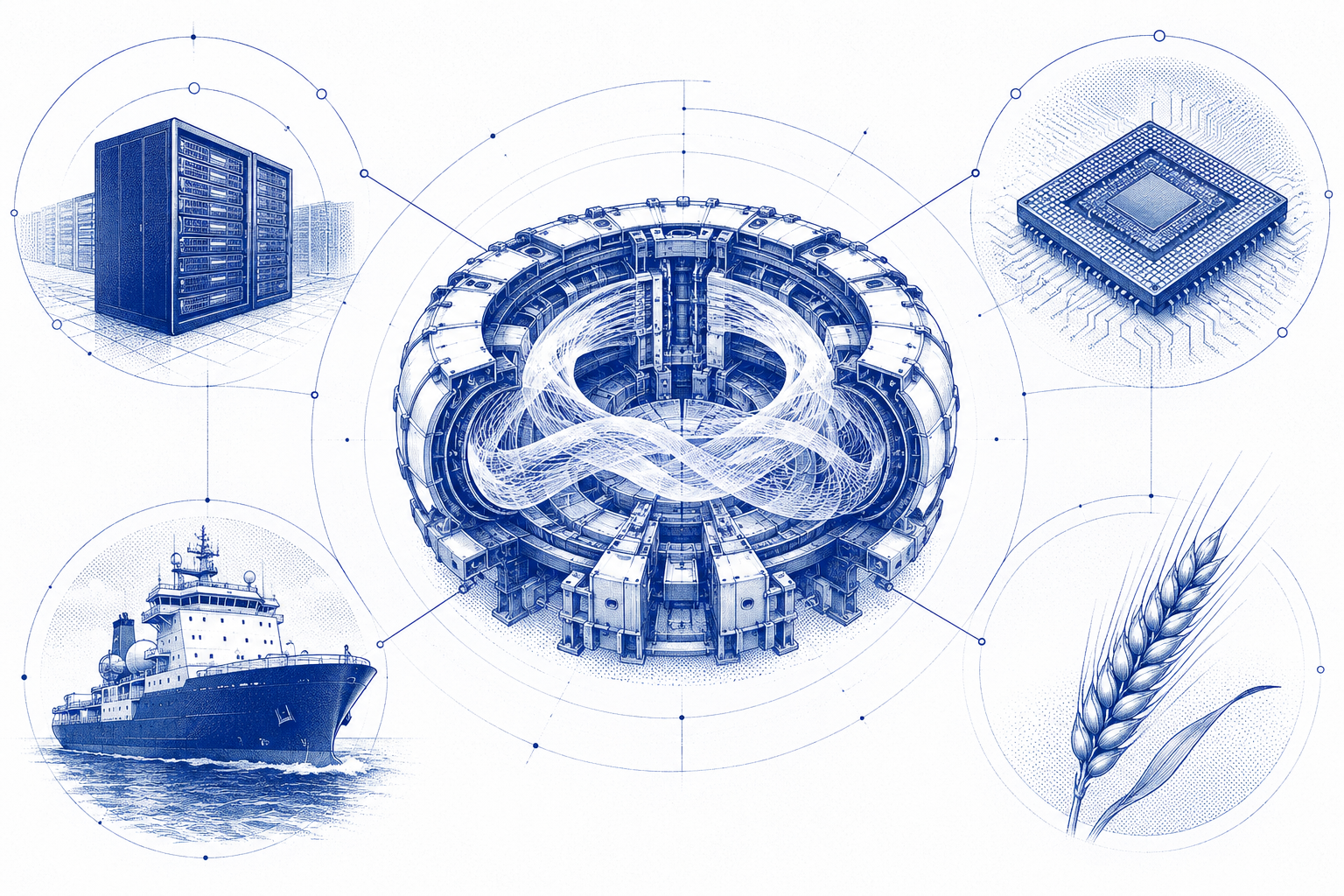
The largest private investment in European fusion on record, valuing the company at €2.4B. Spun out of the Max Planck Institute, Proxima builds stellarators — the more stable alternative to the tokamak design used by ITER. The €411M funds construction of Alpha, a full demonstration device; Bavaria has separately committed €400M, with Proxima seeking a further €1.2B from the German federal government through a grant tender expected later in 2026. Google and RWE on the same cap table is the tell: data-centre energy demand and utility supply economics are converging on the same technology.
Kraken Technology Group — Portsmouth, UK · $175M · Series B · Autonomous Maritime / Defence · DTCP (lead), British Business Bank, NATO Innovation Fund, Rheinmetall, Inocea Group, HICO, Thesiger Capital, Supernova Invest, Hakluyt Capital
Europe’s newest maritime defence unicorn, valued at $1B. Builds uncrewed surface and subsurface vessels already contracted by the UK MoD and USSOCOM. Rheinmetall’s participation is the structural signal: the prime contractor most exposed to maritime procurement is locking in supply-chain optionality before these platforms scale to production.
Gradium — Paris, France · $100M seed · Foundation Models / Voice AI · Nvidia (new), FirstMark Capital, Eurazeo, DST Global Partners, Eric Schmidt, Xavier Niel
Seven months old and already the best-funded European seed-stage AI company. Founded by the researchers behind EnCodec, SoundStream, and Moshi — the papers underpinning virtually all modern voice AI systems, including those built by OpenAI — Gradium builds ultra-low-latency speech-to-text, text-to-speech, and real-time translation models. Nvidia’s $30M extension is not philanthropic: GPU-intensive voice inference at commercial scale is the workload Nvidia’s H-series chips were engineered for.
CurifyLabs — Helsinki, Finland · €12M · Series A · HealthTech / Personalised Medicine · Sandwater (lead), HealthCap (lead), Tesi, Lifeline Ventures
3D printing-based pharmaceutical compounding: personalised drug doses produced at the pharmacy or clinic rather than a central factory. The PharmaPrinter Aurum compounds up to 9x faster than manual processes. Nordic specialist healthcare VCs alongside Finnish state investor Tesi signals dedicated institutional appetite for hardware-plus-software healthtech beyond pure AI.
InSoil — Vilnius, Lithuania · €120M debt facility · Climate Finance / Agricultural Lending · Pollen Street Capital (EIF InvestEU guarantee)
Private credit enters European agricultural transition finance. InSoil has financed 3,500+ agricultural SMEs across Europe for regenerative practices — cover cropping, no-till, reduced synthetics. The structure is the innovation: an EIF guarantee under InvestEU de-risks the senior tranche, enabling a private credit fund to deploy at scale into a sector where bank lending typically fails. The EIB estimates a €62B annual agricultural SME financing gap. InSoil has built a replicable template for closing it.
Pattern read: Five of this week’s headline deals involve non-traditional capital structures — corporate strategic equity, state co-investment, and private credit with EU guarantee. Pure VC-led rounds are absent from the top tier. European deep-tech is no longer primarily a venture-capital story.
📈Where EU Money Is Flowing
Corporate Strategics, AI Lab Spinouts, Private Credit
Corporate strategics are writing the growth-stage cheque. Google, Nvidia, RWE, and Rheinmetall each took direct equity stakes this week as operating companies, not through investment arms. This compresses the path from lab to deployment: a strategic equity holder is not waiting for a fund exit — it is building a supply-chain relationship. European deep-tech companies that attract a customer-investor get both capital and a route to market in the same transaction.
European AI research labs have found their commercial flywheel. Gradium was spun out of Kyutai, a Paris-based non-profit AI lab backed by Xavier Niel. The same week Nvidia backed the spinout, the EU finalised AI Act simplifications extending compliance deadlines for high-risk AI applications. The French research pipeline — CNRS, INRIA, Kyutai — is now producing commercially viable teams at a pace that attracts the same US chip-company capital flowing to OpenAI’s closest partners. That is a structural shift in European AI’s position in the global ecosystem.
Private credit plus EU guarantee is becoming a climate-finance toolkit. InSoil’s €120M facility from Pollen Street, guaranteed by the EIF under InvestEU, is a clear example of the EU’s leverage mechanism: public guarantees unlocking private capital at 4–5x the guarantee face value. Expect more private credit funds to copy this structure across sectors — agricultural lending today, bioeconomy and industrial decarbonisation next. The EU Innovation Fund’s ongoing calls (€5.2B earmarked from EU ETS revenues) run a parallel track for large industrial projects; the EIF guarantee model is its SME-scale equivalent.
💡One Move
Start Your Eurostars Application This Week
Eurostars 3 Call 11 opened on 9 July and closes 10 September — exactly eight weeks from today. It is the EU’s instrument for close-to-market R&D projects led by innovative SMEs that require cross-border collaboration: at least two partners from two different Eurostars countries (37 eligible), with the SME holding at least 50% of the project budget. Awards run €300,000–€500,000 per partner. Around 500 applications arrive per call; approximately 100 are funded, giving Eurostars a 20% success rate — meaningfully higher than EIC Pathfinder’s.
The practical steps are time-bound. Applications must be submitted through myeurekaproject.org, but your national funding body must confirm your project’s eligibility before submission begins — a process that typically takes one to two weeks. Contact your national body this week. Identify your cross-border partner: an existing customer, supplier, or research collaborator in another Eurostars-eligible country is the most natural fit. Eight weeks is the minimum viable preparation window, and the clock started Thursday. Eurostars experience also strengthens a future EIC Accelerator full proposal — particularly the innovation merit and team evaluation criteria — making this application a strategic double investment for founders with a longer grant roadmap.
Get it every Monday
Free · 5 min read · Unsubscribe anytime
← All 22 issuesEUACC · Get funded. Build Europe.