

The programme has been updated. The latest English content is shown while this translation is refreshed.
EIC Pathfinder Challenges at a glance
- Last deadline
- Last round closed
- Funding
- Up to €4M
- Grant for early-stage, challenge-led research.
- Budget
- €96M (2026, across three Challenges)
- Who can apply
- All three 2026 Challenges allow single applicants, two-partner consortia (two entities in two different countries), and consortia…
- Mid-caps and large companies cannot apply as sole entities, but they can participate as members of a multi-entity consortium
- Eligible applicants include universities, research organisations, SMEs, start-ups and other legal entities
Latest calls
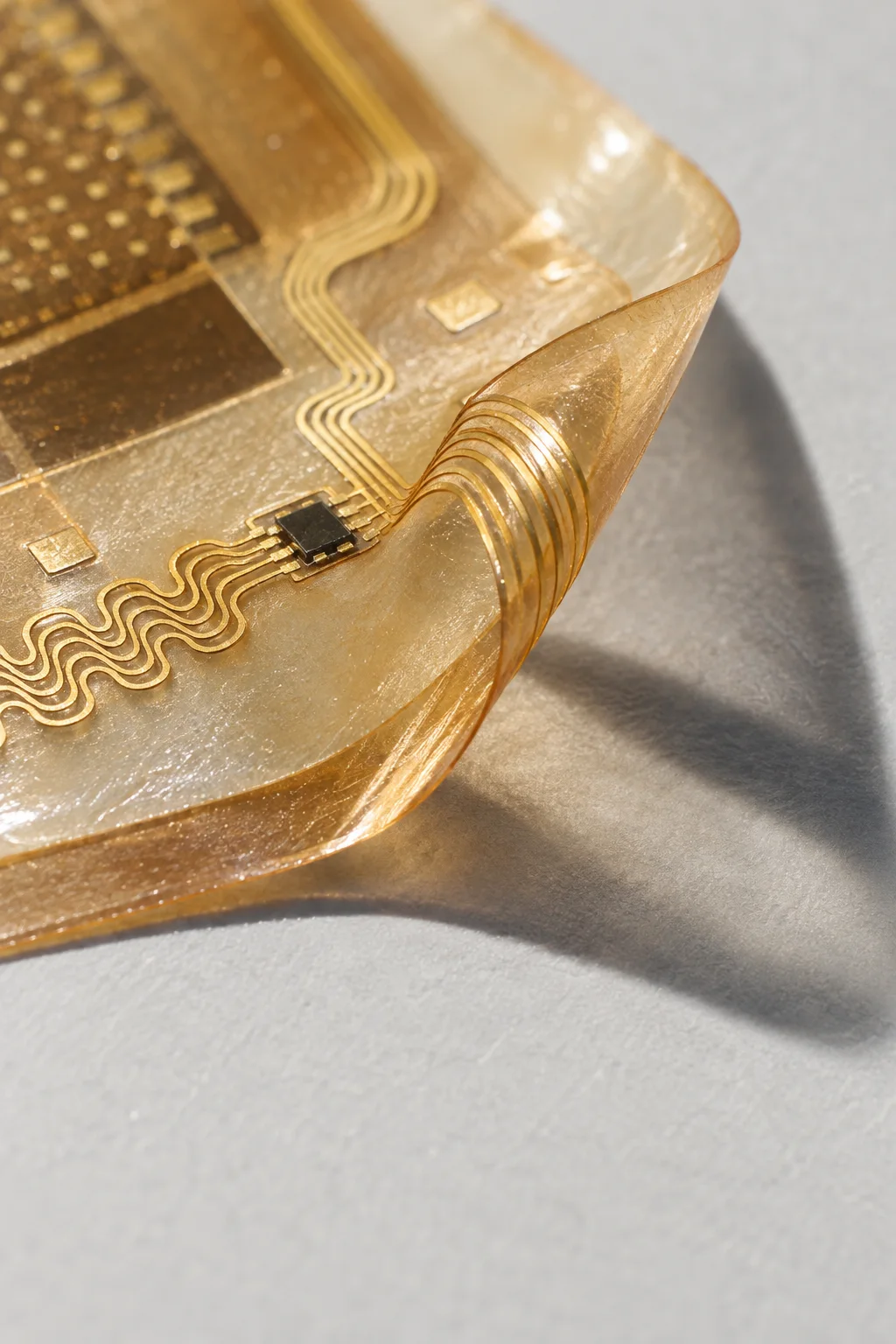
- Advanced Materials for Miniaturised Energy Harvesting SystemsHORIZON-EIC-2026-PATHFINDERCHALLENGES-01-01 ·
- Biotechnology for Healthy AgeingHORIZON-EIC-2026-PATHFINDERCHALLENGES-01-02 ·
Closed
- 2026 deadline: 28 October 2026 at 17:00 Brussels time — now passed.
What is happening
- The call is closed; 2026 proposals are in evaluation, with results expected around March-April 2027.
Good to know
- There is a single cut-off each year, with no rolling or multi-stage submission. The 2027 EIC Work Programme has been adopted with €1.8 billion; a 2027 Pathfinder Challenges call is expected.
Recorded editorial check · 17 days ago (5. Nov. 2026)
On this page · 20 sections→
- 01At a glance
- 02Overview
- 03Is this for you?
- 04Success rates
- 05Eligibility
- 06Readiness (TRL)
- 07Funding detail
- 08How to apply
- 09How it is scored
- 10Templates
- 11After a rejection
- 12Budget breakdown
- 13Deadlines
- 14After you're funded
- 15Practical notes
- 16Who's been funded
- 17Key features
- 18Official links
- 19FAQ
- 20Sources & research scope
Overview
EIC Pathfinder Challenges is the themed, top-down half of the European Innovation Council's Pathfinder programme: instead of letting you pick any topic (that is Pathfinder Open), the European Commission names a handful of strategic deep-tech frontiers each year and funds the boldest research consortia chasing them. The 2026 edition runs three Challenges — Advanced materials for miniaturised energy harvesting systems, Biotechnology for healthy ageing, and DeepRAP (deep reasoning, abstraction and planning towards trustworthy cognitive AI systems). Grants reach up to €4 million at a 100% funding rate (the EU covers all eligible costs), aimed at early-stage, high-risk science — roughly TRL 1-4, meaning anything from a basic principle to a lab proof-of-concept. The pot is €96 million for 2026, split roughly €32 million per Challenge, with a single annual cut-off on 28 October 2026, which has now passed. Evaluation is underway; results are expected by approximately March 2027. This is patient money for radical ideas, not a product subsidy.
The 2025 Challenges result selected 30 of 647 eligible proposals: 4.6%.
Is this for you?
- Any legal entity in an EU Member State or Associated Country — universities, research organisations, startups, SMEs, industrial partners
- Single applicants allowed (unlike Pathfinder Open)
- Two-partner consortia from two different Member States / Associated Countries
- Early-stage science at TRL 1–4 (technology readiness level — lab concept to validated prototype)
- Work that fits one of the three named 2026 Challenge topics
- Open-topic blue-sky research on your own theme → EIC Pathfinder Open (2026 call closed; draft 2027 deadlines: Stage 1 shortlist 25 Feb 2027, full application 16 Sep 2027 — draft Work Programme 2027, not yet formally adopted)
- Startup with working tech (TRL 5+) wanting scale-up money → EIC Accelerator
- Maturing results from a finished Pathfinder or ERC project → EIC Transition
- Market-near collaborative R&D with industry partners → Horizon Europe cluster calls or Eurostars
Consortium maths: a single applicant just needs to sit in a Member State or Associated Country; a two-entity consortium needs two different such countries; from three entities up, at least one partner must be in an EU Member State.
Success rates: the honest picture
This describes the stated cohort and evaluation stage, rather than the outcome of a future application.
| Cohort | Eligible proposals | Selected | Calculated ratio |
|---|---|---|---|
| 2025 Challenges call | 647 | 30 | 4.6% |
The 2025 Challenges result selected 30 of 647 eligible proposals: 4.6%. The earlier submission release counted 667 proposals before eligibility filtering; using that denominator gives 4.5%. Around €118M was allocated, with an officially reported €3.93M average. Neither ratio describes the still-open 2026 competition.
Eligibility
- 1All three 2026 Challenges allow single applicants, two-partner consortia (two entities in two different countries), and consortia of three or more entities in at least three countries (with at least one in an EU Member State or Horizon Europe associated country). There is no minimum three-entity consortium requirement.
- 2Mid-caps and large companies cannot apply as sole entities, but they can participate as members of a multi-entity consortium.
- 3Eligible applicants include universities, research organisations, SMEs, start-ups and other legal entities; the programme actively encourages mixed academia-industry teams.
- 4Funded research must sit at early Technology Readiness Levels (roughly TRL 1-4), advancing a scientific principle toward a lab-scale proof-of-concept rather than maturing a product.
- 5Each proposal must address one of the three 2026 Challenge topics and serve that Challenge’s stated portfolio objectives; proposals outside the named topics are ineligible.
- 6Proposals must show a convincing long-term vision of a radically new technology and a high-risk/high-gain approach to be considered at all.
Unlike most Horizon Europe calls, Pathfinder Challenges accept three shapes: a single legal entity established in a Member State or Associated Country; a two-partner consortium of independent entities from two different Member States or Associated Countries; or a standard consortium of three-plus independent entities (at least one in a Member State, plus two others in different Member States or Associated Countries). The Work Programme lists universities, research organisations, SMEs (small and medium-sized enterprises), startups — even natural persons — as eligible. The trap: in single-beneficiary projects, mid-caps and larger companies are explicitly not permitted. Big firms must join a consortium.
The United Kingdom is associated to the entire Horizon Europe programme — its only carve-out (the EIC Fund equity component of the Accelerator) is irrelevant to Pathfinder, a pure grant. Switzerland's association agreement now produces legal effects: Swiss entities count as Associated Country beneficiaries for award procedures from the 2025 budget onwards, so they can coordinate or partner in the 2026 Challenges with full EU funding. Check the live List of Participating Countries on the Funding & Tenders Portal before submission, as positions can shift.
Funding is 100% of eligible costs as a Horizon Europe lump sum, and the amount is determined during the evaluation, based on what you propose. The EIC (European Innovation Council) considers up to €4m appropriate per project — larger requests need explicit justification. Total pot: €96m, split roughly equally across the three 2026 Challenges. The 2026 Challenges submission deadline of 28 October 2026 at 17:00 CET (Brussels time) has passed. Evaluators comment on significant over- or under-estimation of costs, and the Work Programme advises a dedicated portfolio-activities work package of at least 10 person-months. Skipping it signals you have not read the rules.
Proposals with elements touching the evolution of European communication networks (5G, post-5G and linked technologies) fall under the protection restriction in Annex 2, Section B1 of the Work Programme: entities assessed as high-risk suppliers of mobile network communication equipment — and any entities they own or control — cannot participate as beneficiaries, affiliated entities or associated partners. The assessment weighs ownership and governance (state control, government involvement), links to third-country governments and supply-chain cybersecurity practices.
During grant preparation the agency checks the coordinator's financial capacity whenever the requested grant is €500,000 or more — public bodies and international organisations are exempt. The check uses uploaded accounts (profit-and-loss, balance sheet, audit report) plus indicators such as dependency on EU funding and prior-year deficits. A weak result can trigger joint-and-several liability of affiliated entities, pre-financing paid in instalments, no pre-financing at all, a demand to replace the entity — or rejection of the entire proposal. Thinly capitalised startup coordinators should prepare evidence early.
Every application must include a completed ethics self-assessment; projects raising ethics issues undergo a full ethics review before funding is authorised, with resulting requirements written into the grant agreement as deliverables. Projects involving EU-classified or sensitive information go through a separate security appraisal — anything involving TRES SECRET UE/EU TOP SECRET information cannot be funded at all. Relevant for the 2026 Challenges' biotech (healthy-ageing trials, human material) and cognitive-AI (trustworthy AI, dual-use) themes.
Where you need to be
Your project should sit at TRL 1–4 when you apply. The eligible band is highlighted below.
- 1Basic principles observedA scientific idea is first noted; research begins translating observations into possible applications.
- 2Technology concept formulatedA practical application is invented on paper, but nothing has been built or tested yet.
- 3Experimental proof of conceptLab experiments confirm the key idea actually works in principle.
- 4Technology validated in labComponents are built and shown to work together under controlled lab conditions.
- 5Technology validated in relevant environmentThe technology is tested in conditions that mimic the real world, not just the bench.
- 6Technology demonstrated in relevant environmentA working prototype is demonstrated in a realistic, industrially relevant setting.
- 7System prototype demonstration in operational environmentA near-final prototype is proven in the actual operating environment.
- 8System complete and qualifiedThe technology is finished, certified and qualified through testing.
- 9Actual system proven in operational environmentThe fully commercial product works reliably in real-world deployment.
The money — 100%-funded research grants, zero dilution
This is a Horizon Europe research grant at 100% of eligible costs with a 25% flat-rate top-up for indirect costs. There is no national matching budget to secure and no own-contribution requirement — a startup or university lab can run a €4M project without putting in cash.
Under the 2026 work programme, Pathfinder grants are paid as lump sums: you submit a detailed budget at proposal stage, the amount is fixed during grant preparation, and payment follows completed work packages instead of audited timesheets and cost statements. Simpler admin — but get the budget right up front, because it is locked at signature.
Challenges are the only Pathfinder route where one company or one lab can apply alone — but you are scored against multi-partner consortia, and the EIC's Programme Managers assemble each Challenge's winners as a deliberate portfolio of competing and complementary approaches. A €96M budget at ~€4M a grant means roughly 25–30 winners across all three topics.
How to apply, step by step
- 1
SubmissionDeadline 28 October 2026, 17:00 Brussels time
Single-stage full proposal against one Challenge. Budget EUR 96 million split roughly equally across the 3 Challenges; up to EUR 4 million per project at 100% (lump sum).
Who: A single legal entity in a Member State or Associated Country (not a mid-cap or large company), or 2 independent entities from 2 different MS/AC, or 3+ entities under the standard 3-country rule
- 2
Step 1: individual evaluation and consensusFirst weeks after the deadline
Each proposal scored on Excellence, Impact, Implementation. Experts then meet in a consensus group to agree common scores and comments.
Who: At least three EIC expert evaluators
- 3
Step 1: committee consistency checkAfter consensus
Checks consistency across proposals and finalises scores and comments. All proposals meeting every threshold go to step 2.
Who: EIC evaluation committee
- 4
Step 2: portfolio selectionBefore results
Committee maps above-threshold proposals into categories from the Challenge Guide (building blocks, competing technologies, application areas, risk level, TRL, size) and picks a coherent portfolio. The selected set can differ from pure score order. The committee may propose minor adjustments to selected proposals.
Who: EIC evaluation committee of expert evaluators plus EIC Programme Managers
- 5
ResultsBy 5 months after the deadline (indicative), so about end of March 2027
Evaluation result letter and ESR. If you were funded, or rejected while scoring higher than some funded proposals, you are told the portfolio reasons.
Who: EISMEA
- 6
Grant preparationWithin about 3 months; grant signed by 8 months after the deadline (indicative), about June 2027
Grant agreement plus planning of portfolio activities and the Challenge roadmap with the Programme Manager.
Who: EISMEA project officer, EIC Programme Manager, applicant
How proposals are scored
0 to 5 per criterion, half points allowed. 0 = fails or cannot be assessed, 1 = poor, 2 = fair, 3 = good with a number of shortcomings, 4 = very good with a small number of shortcomings, 5 = excellent, only minor shortcomings. Weights are used only for ranking, not for passing thresholds.
Excellence
- Weight
- 50%
- To pass
- 4/5
Clear objectives that contribute to the overall goal and the specific objectives of the chosen Challenge; ambition beyond the state of the art; a sound methodology including concepts, models, assumptions, gender dimension in research content and open science practices.
Impact
- Weight
- 30%
- To pass
- 3.5/5
Credible pathways to the Challenge's expected outcomes and impacts; a realistic proof of principle showing the technology's potential for the Challenge; adequate IP protection and exploitation measures; involving future leaders in translating research; communication and dissemination about new-market or global-challenge potential.
Quality and efficiency of the implementation
- Weight
- 20%
- To pass
- 3/5
Coherent work plan with risk mitigation; appropriate allocation of person-months and other costs across work packages and partners; capacity and expertise of the single applicant or of every consortium member.
- Overall
- No separate overall threshold. Passing all three thresholds gets you into the step 2 portfolio selection; it does not guarantee funding.
- Equal scores
- No call-specific tie-break order. Ties are resolved in step 2 portfolio selection, with the general Annex 2 F.1 method as fallback (coverage of call aspects not already covered, then Excellence, then Impact, then gender balance of researchers with leading roles, then number of countries, then other factors).
What evaluators mark down
- Not addressing every specific objective of the Challenge. For energy harvesting, for example, the WP says applicants must address all of the listed objectives, up to a TRL 4 lab benchmark. source
- Weak fit to the Challenge portfolio. Above-threshold proposals are selected by portfolio categories from the Challenge Guide, so a proposal that does not say which category it fills or how it feeds the common roadmap can lose to lower-scored ones. source
- No portfolio work package. Applicants are advised to include a dedicated work package with at least 10 person-months for portfolio activities; leaving it out weakens Implementation. source
- Evaluated as submitted: experts cannot suggest fixes, so gaps reduce the score directly, and partly out-of-scope work is scored down. source
- Ineligible single applicant: as a single beneficiary, mid-caps and larger companies are not permitted. source
Official templates and forms
- Standard application form (HE EIC Pathfinder Challenges), Part B technical descriptionSections 1 to 3 max 30 A4 pages including tables, figures and references. Same formatting rules as other Horizon Europe forms (11 pt, 15 mm margins). Excess pages hidden after the deadline. Single-beneficiary and consortium applicants use the same form; the Implementation section is assessed as quality of the applicant or consortium.
- Detailed lump sum budget table (HE LS, Euratom)Mandatory annex. Cost estimates per category, beneficiary and work package that add up to the requested lump sum. Include a work package for portfolio activities with at least 10 person-months.
- Standard evaluation form (HE EIC Pathfinder Challenges)Form the experts score on. Note: its cover notice says Impact threshold 3, but the criterion box and the Work Programme say 3.5. The Work Programme governs.
- Challenge Guide: Advanced Materials for Miniaturised Energy Harvesting SystemsDefines the portfolio categories used in step 2 and includes a portfolio work package template. Applicants must address all four specific objectives in the WP and reach TRL 4.
- Challenge Guide: Biotechnology for Healthy AgeingPortfolio categories and objectives for this Challenge.
- Challenge Guide: DeepRAP (Deep Reasoning, Abstraction and Planning towards trustworthy AI)Portfolio categories and objectives for this Challenge.
- Call page HORIZON-EIC-2026-PATHFINDERCHALLENGES-01Open now. Deadline 28 October 2026, 17:00 Brussels time. No pitch deck or video.
After a rejection
- Feedback you get
- ESR with final scores and comments endorsed by the evaluation committee. Portfolio considerations are explained if you were funded, or if you were rejected despite outscoring a funded proposal in the same Challenge. Lump sum budget comments only if invited, reserve-listed or cut for cost misestimation.
- Applying again
- No resubmission limit in WP 2026. Challenge topics change from year to year, so the official route for an unsuccessful Challenge proposal is often Pathfinder Open: the EIC FAQ confirms you can resubmit it there, rewritten to the Open eligibility rules (3 entities, 3 countries), criteria and template.
- Challenging the result
- Deadline: 30 days from when you open the evaluation result letter in the Portal. Letters not opened within 10 days of sending count as opened.If you think the evaluation procedure was flawed (not the experts' judgement of merit), the coordinator files an evaluation review request through the Funding & Tenders Portal, following the instructions in the evaluation result letter. Max 7,000 characters, one request per proposal. You can raise procedural irregularities, factual errors, manifest errors of assessment or abuse of power (for example scores that contradict the comments, or a conflict of interest). Disagreeing with the experts' opinion, or repeating your proposal, is not considered. A review committee either confirms the result or orders a re-evaluation of the proposal as submitted, usually by new experts; a re-evaluation can lower the score. Re-evaluation only happens if the error could change the funding decision. Alternatives: an Article 22 request to the parent DG (1 month, because EISMEA is an executive agency) or an annulment action at the EU General Court (2 months). How to file it ↗
- Seal of Excellence
- None for Pathfinder Challenges in WP 2026.
Checked against the call documents, evaluation forms and redress rules on 18 October 2026. EIC Work Programme 2026, current version of 17 June 2026, section II.2 and Annex 2 · HE EIC Pathfinder Challenges application form · HE EIC Pathfinder Challenges evaluation form · EIC Pathfinder Challenges 2026 page with Challenge Guides · EIC FAQs: Pathfinder · EIC Work Programme 2026 FAQs (PDF)
Typical Budget Breakdown
Deadlines & access
- 22 Jul 202622 Jul 2026Call opens (confirmed)
Call opened on the EU Funding & Tenders Portal (HORIZON-EIC-2026-PATHFINDERCHALLENGES-01) on 22 July 2026 as scheduled. Three challenges confirmed: Advanced Materials for Miniaturised Energy Harvesting Systems (01-01), Biotechnology for Healthy Ageing (01-02), and DeepRAP — Deep Reasoning, Abstraction and Planning towards Trustworthy Cognitive AI Systems (01-03). Budget €32m per challenge, €96m total.
- 28 Oct 2026, 17:00 Brussels (closed)28 Oct 2026, 17:00 Brussels (closed)Single submission deadline (closed)
The 2026 Pathfinder Challenges call closed on 28 October 2026 at 17:00 Brussels time. Part B sections 1-3 capped at 30 A4 pages; proposals were submitted via the Funding & Tenders Portal. The Director-General could have delayed this deadline by up to two months, but no extension was announced.
- Nov 2026 – Mar 2027Nov 2026 – Mar 2027Two-step evaluation
Step 1: at least three EIC expert evaluators score each proposal against Excellence (threshold 4/5), Impact (3.5/5) and Implementation (3/5). Step 2: an evaluation committee including EIC Programme Managers assembles the Challenge portfolio — above-threshold scores do not guarantee selection.
- By ~28 Mar 2027 (T+5 months)By ~28 Mar 2027 (T+5 months)Results letters and Evaluation Summary Report
Horizon Europe's indicative five-month time-to-inform. Retained applicants get a funding letter; portfolio-consideration reasoning is disclosed if you scored above a funded proposal but were not selected.
- Apr–Jun 2027Apr–Jun 2027Grant agreement preparation
Expected to complete within three months of the invitation letter. The EIC Project Officer and Programme Manager plan portfolio activities and start the Challenge roadmap with you during this phase; financial-capacity and legal-entity validation happen here.
- By ~28 Jun 2027 (T+8 months)By ~28 Jun 2027 (T+8 months)Grant agreement signature
Horizon Europe's indicative eight-month time-to-grant from the call deadline.
- ~30 days after signature / project start~30 days after signature / project startFirst pre-financing lands
Normally 160% of the average EU funding per reporting period (less for single-period actions), minus a 5–8% deduction routed to the Mutual Insurance Mechanism.
After you're funded
EIC Programme Managers define each Challenge and then build and steer the winners as a portfolio — competing approaches and complementary angles run side by side. Expect joint portfolio activities with the other funded teams in your Challenge, not a quiet bilateral grant.
Pathfinder winners get the same Business Acceleration Services machine as Accelerator companies: tailored coaching and mentoring, access to corporates, investors and ecosystem partners — useful early, since most Pathfinder teams are years from a product.
Running Pathfinder projects can apply for fixed-amount Booster grants of up to €50,000 to explore commercialisation routes for emerging results — small money, but non-competitive with your main budget.
Pathfinder is the start of the EIC pipeline: results feed eligibility for EIC Transition (lab-to-market maturation), and the EIC offers potential fast-track access to the EIC Accelerator for the most promising outcomes.
Winning the evaluation only earns you grant agreement preparation; funding is explicitly conditional on signature. Under the lump-sum model, instalments are then tied to completing work packages — slipping a work package delays the payment attached to it.
Practical notes
Unlike most Horizon Europe calls, Pathfinder Challenges accept either a single applicant or a consortium of at least three independent legal entities in different countries. In practice teams coalesce around the three challenge topics: each topic page on the Funding & Tenders portal (the European Commission's application site) has partner-search switched on, so you can browse announcements from labs and firms targeting the same topic, and the 20 March 2026 Info Day ran per-challenge networking sessions where attendees pitched their competences in two minutes to find co-applicants. The recordings and slides remain on the event page.
Every EU country — and many non-EU participants — runs a National Contact Point (NCP) network: government-funded advisers whose job is to help you apply to Horizon Europe at no charge. They explain eligibility, run information and networking events, and organise proposal-writing workshops. Ask your NCP early whether they offer a pre-submission read-through of your draft; offerings vary by country, and the directory on the Funding & Tenders portal lists the right adviser by country and thematic function.
The European Innovation Council (EIC) held its online Info Day for this call on 20 March 2026. The plenary covered how Pathfinder Challenge calls differ from the bottom-up Pathfinder Open, and parallel sessions were led by the EIC Programme Managers who wrote the three challenges — Paolo Bondavalli (advanced materials), Uschi Symmons (healthy ageing) and Hedi Karray (DeepRAP). Since Programme Managers actively steer their challenge portfolios after award, their recorded sessions and slides are required viewing before you draft.
Each of the three 2026 challenges has its own Challenge Guide PDF on the EIC challenge page, alongside the EIC Work Programme 2026 (which puts €262 million into Pathfinder overall this year). Challenge proposals are scored against the specific objectives and expected outcomes in these documents, not against a generic excellence template — projects that ignore the portfolio logic the Programme Manager describes tend to fail on impact. Grants run up to €4 million; the single deadline was 28 October 2026, which has now passed.
For the energy-harvesting challenge, the second step builds a complementary portfolio across materials, physical mechanisms and applications. Explain your category and contribution to the common roadmap; the final portfolio can differ from the numerical ranking.
The energy-harvesting guide includes a portfolio work-package template. Allow for joint benchmarking, working groups and updates to the portfolio plan as results emerge; the guide supplements the work programme.
Who's been funded
Selected in the 2025 Challenges cohort for AI-assisted lung-cancer care and clinical decision support.
Selected for autonomous robotic teams and human–robot collaboration in timber construction.
Selected to develop protein-based materials and biocatalysts with synthetic cells.
Key Features
Official links & resources
- Call page: EIC Pathfinder Challenges 2026 (HORIZON-EIC-2026-PATHFINDERCHALLENGES-01) — Funding & Tenders portal
- Topic: Advanced Materials for Miniaturised Energy Harvesting Systems — start your submission here
- Topic: Biotechnology for Healthy Ageing — start your submission here
- Topic: DeepRAP — Deep Reasoning, Abstraction & Planning towards trustworthy Cognitive AI Systems — start your submission here
- EIC Pathfinder Challenges 2026 — official challenge pages with downloadable Challenge Guides
- EIC Work Programme 2026 — full text (latest version, amended June 2026) plus factsheets and recorded info sessions
- EIC Pathfinder — programme overview (TRL 1-4, grants up to €4 million)
- Frequently asked questions on EIC Pathfinder — eligibility, consortium rules, budgets, resubmission
- 2026 Pathfinder Challenges Info Day (20 March 2026) — recordings, slides and agenda
- EIC Work Programme 2026 — current amended edition
- Challenge Guide — Advanced Materials for Miniaturised Energy Harvesting Systems
- Challenge Guide — Biotechnology for Healthy Ageing
- Challenge Guide — DeepRAP: Deep Reasoning, Abstraction & Planning towards trustworthy Cognitive AI Systems
- Standard Application Form (HE EIC Pathfinder Challenges) — Part A + Part B template
- Detailed budget table for lump-sum proposals (Excel)
- EU Grants — Annotated Grant Agreement (AGA)
- Lump Sum Funding: What do I need to know?
- How to manage your lump sum grants
- EIC FAQ — Lump sum budgets and financial annexes
- EIC Frequently Asked Questions hub
- Lump sum funding in Horizon Europe — portal hub
- Advanced Materials for Miniaturised Energy Harvesting — Challenge Guide
- Biotechnology for Healthy Ageing — Challenge Guide
- DeepRAP cognitive AI — Challenge Guide
- Selection evidence: challenge
- Selection evidence: challenge_sub
- Selection evidence: challenge_pdf
Frequently Asked Questions
What is the difference between Pathfinder Challenges and Pathfinder Open?
Challenges funds research on fixed, top-down topics set by the European Commission (three for 2026), while Open lets you propose any breakthrough theme of your choosing. Both support early-stage, high-risk science at up to €4 million and a 100% funding rate.
What are the three 2026 Challenge topics?
Advanced materials for miniaturised energy harvesting systems; Biotechnology for healthy ageing; and DeepRAP — deep reasoning, abstraction and planning towards trustworthy cognitive AI systems.
How much funding can I get, and do I need to co-finance?
Up to €4 million per project, at a 100% funding rate, meaning the EU covers all eligible costs and no co-financing is required. Larger amounts are possible only where a specific Challenge allows and the budget is well justified.
Do I need a consortium to apply?
Not necessarily. All three 2026 Challenges explicitly allow a single applicant, a two-partner consortium, or a full consortium of three or more entities. For multi-entity applications, all partners must be established in different countries, with at least one in an EU Member State or Horizon Europe associated country. Mid-caps and large companies cannot apply as sole entities but can participate in a consortium.
What are my real chances of being funded?
In the 2025 Challenges round the EIC funded 30 of 647 eligible proposals — a success rate of roughly 4.6%. Note that the 2025 round spanned four different Challenge areas, so read this as a proxy for competitiveness rather than a same-topic rate. The 2026 call was similarly competitive, with €96 million spread across three topics.
When is the 2026 deadline?
The 2026 cut-off was 28 October 2026 at 17:00 Brussels local time. The call is now closed; proposals are in evaluation. Results are expected around March-April 2027 (Horizon Europe's standard maximum time-to-inform is five months from the deadline).
What technology maturity (TRL) should my project be at?
Early stage — roughly TRL 1–4, from a basic scientific principle through to a lab-scale proof-of-concept. Projects closer to market are better suited to EIC Transition or the EIC Accelerator.
What this guide covers
Verified 2026 topics, deadline and separate Challenge Guide artefacts; added guidance on portfolio selection and implementation. Existing rich content is retained; verification covers the named corrections and newly added source references, not every historical statistic or paragraph. Replaced unsourced aggregate selection claims with dated official cohort results, explicit denominators and source-linked project examples; removed unverified historical chart rows.
Research updated: 2026-10-12
Still to verify
- Each proposal still needs a topic-by-topic scope and eligibility assessment.
- Legacy project statistics and the assumed equal allocation across challenges were not separately audited in this pass.
- Future challenge topics and 2027 dates require the next adopted work programme.
- Retained legacy document links were preserved, not all re-fetched; live PDF indexing was not performed.
- Earlier unreferenced cohort histories and aggregate portfolio/average-award claims were removed from these statistics; this is a dated selection sample, not a complete award-history reconstruction.
Official call documents take precedence. A listed reference is not necessarily indexed in full by the AI.
Read the complete text reference →Related Programmes

Ask about EIC Pathfinder Challenges with live data.
A free EUACC account connects ChatGPT, Claude or Gemini to every EU programme, open call and deadline we track. Weekly call alerts are free too.
Bring EUACC into your AI.
Choose your AI and follow the walkthrough. Your free EUACC account connects the two.
Illustrated walkthrough
Add EUACC to Claude
- In Claude, open Customize, then Connectors.
- Click + Add, then Add custom connector.
- Name it EUACC, paste the link and click Continue.
- Review the detected authentication settings and click Continue. Choose Sign in now, then Register automatically under OAuth client.
- Click Add, then sign in with your free EUACC account and approve access.
https://www.euacc.ai/api/mcpWorks on every Claude plan, including Free (one custom connector). On Team and Enterprise, an Owner adds it.
On a phone, add it at claude.ai in your browser. It then shows up in the Claude app the next time you sign in.
Use EUACC to explore “Pathfinder challenges” (https://www.euacc.ai/programmes/pathfinder-challenges). Does this programme fit my startup, and what should I check before applying? Cite the available sources and flag missing or outdated information.